
32nd DIHAC cross-cultural exchange meeting analysis report
Digital Solutions for Healthy Ageing: Smart Eye Camera from Japan and Community Volunteering Services from Singapore
Vandana Garg, Myat Yadana Kyaw, Shintaro Nakayama, Sng Hock Lin, Thet Htoo Pan, Myo Nyein Aung and Ryuichi Komatsu
Report in Japanese Report in Thai Report in Spanish Report in Vietnamese Report in Korean
The Digitally Inclusive, Healthy Ageing Communities (DIHAC) Study is a global, cross-cultural research initiative dedicated to advancing healthy ageing through digital inclusion, community engagement, and transdisciplinary collaboration. Initially established across Japan, the Republic of Korea (ROK), Singapore, and Thailand, the DIHAC network has expanded to include India, Malaysia, Vietnam, Nepal, Belgium, Italy, and countries across the Latin American region. Through bi-monthly cross-cultural exchange meetings, DIHAC brings together researchers, clinicians, public health experts, digital health innovators, policymakers, non-governmental organizations, and students to share evidence, innovations, and best practices in ageing research.
The 32nd DIHAC Cross-Cultural Exchange Meeting, held online on 10 December 2025, convened more than 50 participants from Japan, Singapore, Korea, Thailand, Vietnam, Cambodia, Malaysia, Indonesia, India, China, Mexico, Nepal, South Africa, Switzerland, Ukraine, Belgium, Italy, the United Kingdom, and the United States. The meeting focused on digital health solutions and community-based strategies that address health inequities and promote inclusive, healthy ageing across diverse socio-cultural contexts.
The meeting commenced with a short socializing and networking session initiated by Assoc. Prof. Myo Nyein Aung, Principal Investigator of the DIHAC Study and Associate Professor at the Department of Global Health Research, Juntendo University, Japan. This informal interaction created space for participants to reconnect, welcome new members, and establish a collaborative atmosphere for dialogue and exchange.
The session was chaired by Professor Ryuichi Komatsu, PhD, School of Tropical Medicine and Global Health, Nagasaki University, Japan. In his opening remarks, Prof. Komatsu highlighted DIHAC’s long-standing commitment to digital inclusion, community-oriented solutions, and cross-country learning. Drawing on his extensive experience in global health leadership, he emphasized the importance of translating technological innovation and community engagement into sustainable health system strengthening for ageing societies.
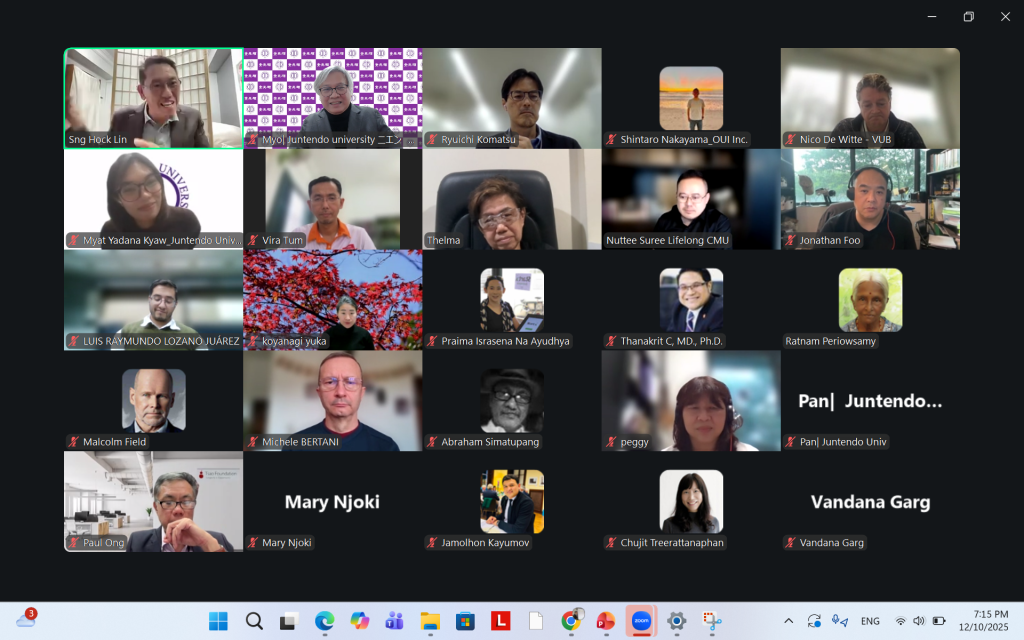
Figure1: Chairperson Professor Ryuichi Komatsu, speakers, international audience and DIHAC study team at the 32nd DIHAC meeting on December 10th, 2025
Presentation 1: Smart Eye Camera with Telemedicine and AI Functions (Japan)
The first presentation was delivered by Mr. Shintaro Nakayama, Chief Operating Officer of OUI Inc. and Researcher at the Department of Ophthalmology, Keio University School of Medicine, Tokyo. His presentation addressed the growing global burden of blindness and visual impairment, noting that over one billion people worldwide experience vision loss, much of which is preventable or treatable with early diagnosis (1). Mr. Nakayama introduced the Smart Eye Camera (SEC), an innovative digital health solution that transforms a smartphone into a portable slit-lamp microscope through a specialized medical attachment. The smartphone’s built-in flashlight functions as a light source, while a dedicated application enables high-quality image capture, secure cloud storage, and real-time data sharing. This allows eye images to be reviewed remotely by specialists, supporting tele-ophthalmology services in settings with limited access to trained ophthalmologists.
The presentation further highlighted the integration of machine learning and artificial intelligence within the SEC system, enabling automated grading of cataracts and assessment of dry eye disease. Validation studies have demonstrated that the SEC has reliability and diagnostic accuracy comparable to conventional slit-lamp microscopes (2,3). By reducing transportation barriers, logistical costs, and dependence on scarce specialist resources, the SEC has proven particularly valuable in low-resource and rural settings. To date, the technology has been deployed in over 60 countries and has been recognized internationally, including listing in the WHO Compendium of Innovative Health Technologies for Low-Resource Settings. Participants engaged in discussion on implementation challenges, regulatory pathways, cost considerations, and workforce training needs. There was strong interest in integrating the Smart Eye Camera into community-based healthy ageing programs, primary care services, and outreach initiatives targeting older adults.
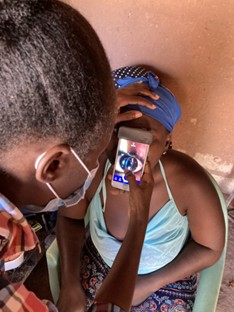
Figure 2: Examination of the eye through smartphone with Smart Eye Camera (SEC)
Presentation 2: Strengthening Community, Empowering Older Adults (Singapore)
The second presentation was delivered by Dr. Sng Hock Lin, PhD, Chief of the Silver Generation Office (SGO) at the Agency for Integrated Care (AIC), Singapore. Dr. Sng outlined Singapore’s strategic response to rapid population ageing, noting that while the country is expected to enter a super-aged phase nationally by 2026, some regions have already reached this stage. He described Singapore’s shift toward community-based preventive approaches, anchored in national initiatives such as Healthier SG and Age Well SG. Central to these initiatives is the Agency for Integrated Care, which leads efforts to expand Active Ageing Centres and strengthen integrated support systems that enable older adults to age in place.
Dr. Sng highlighted the Silver Generation Office’s holistic “touch–hold–care” model, which emphasizes sustained engagement with older adults through face-to-face outreach, community activities, and digital tools. Supported by a network of approximately 9,000 volunteers across 17 offices islandwide, the SGO connects older adults with health and social services, promotes digital literacy, and encourages participation in physical, social, and volunteering activities. Intergenerational and family volunteering models were presented as key strategies for strengthening social bonds, improving volunteer retention, and enhancing older adults’ sense of purpose. A distinctive feature of the SGO model is the use of artificial intelligence to analyze large-scale qualitative data generated through community engagement. By leveraging AI alongside human expertise, the SGO analyzes more than 300,000 qualitative data points annually, transforming community insights into actionable evidence for service improvement and policy reform. This integration of community engagement and AI-enabled analytics enables rapid identification of emerging issues and strengthens policy feedback loops to support ageing in place.
The two presentations stimulated active and reflective discussion among participants. Key themes included the scalability and sustainability of digital health innovations, the ethical and regulatory dimensions of AI use in healthcare, affordability and access challenges, and the persistent issue of social isolation among older adults. Collectively, the sessions demonstrated how technology-driven solutions, such as the Smart Eye Camera, can reduce health inequities at the system level, while community-based and volunteer-driven models, such as Singapore’s Silver Generation Office, strengthen social connectedness, digital empowerment, and responsive policymaking.
In closing, Professor Ryuichi Komatsu commended the speakers and participants for their thoughtful engagement and emphasized the importance of continued cross-cultural learning within the DIHAC network. Assoc. Prof. Myo Nyein Aung expressed appreciation to the chairperson, speakers, and international participants, and formally announced that the 33rd DIHAC Cross-Cultural Exchange Meeting will be held in February 2026. The 32nd DIHAC meeting reaffirmed the transformative potential of combining digital innovation with community-based strategies to promote inclusive, equitable, and healthy ageing across diverse global contexts.
References
- Que L, Zhu Q, Jiang C, Lu Q. An analysis of the global, regional, and national burden of blindness and vision loss between 1990 and 2021: the findings of the Global Burden of Disease Study 2021. Front Public Health. 2025;13:1560449. doi:10.3389/fpubh.2025.1560449
- Triningrat A, Doniho A, Jayanegara WG, et al. Reliability and Accuracy of Smart Eye Camera in Determining Grading of Nuclear Cataract. Korean J Ophthalmol. Apr 2025;39(2):114-124. doi:10.3341/kjo.2023.0131
- Shimizu E, Yazu H, Aketa N, et al. Smart Eye Camera: A Validation Study for Evaluating the Tear Film Breakup Time in Human Subjects. Transl Vis Sci Technol. Apr 1 2021;10(4):28. doi:10.1167/tvst.10.4.28
Authors
Vandana Garg, MSc. Nutrition is Assistant Professor at Manav Rachna International Institute of Research and Studies, Faridabad, Haryana, India, a collaborative researcher at Juntendo University, Tokyo, Japan and investigator of DIHAC study India.
Myat Yadana Kyaw, M.D., is Ph.D. student at the Department of Global Health Research, Graduate School of Medicine, Juntendo University, Tokyo, Japan
Shintaro Nakayama is Chief Operating Officer of OUI Inc. and researcher at the Department of Ophthalmology, Keio University School of Medicine, Tokyo, Japan
Sng Hock Lin, Ph.D., is Chief of the Silver Generation Office at Agency for Integrated Care, Singapore
Thet Htoo Pan, M.D., is Ph.D. student at the Department of Global Health Research, Graduate School of Medicine, Juntendo University, Tokyo, Japan
Myo Nyein Aung, M.D., M.Sc., Ph.D., is Associate Professor at the Department of Global Health Research, Graduate School of Medicine, Juntendo University, Tokyo, Japan
Ryuichi Komatsu, Ph.D., Professor, School of Tropical Medicine and Global Health, Nagasaki University, Japan